
You are excited for Halloween. You are dressed up as zombie with sage green paint and ruby red paint spread across your face. You stain your white jacket with cranberry juice but it looked like blood so you were ok with it. You then sprint out of your home meeting all your friends. One friend was dressed as a camel and used her hump as a bucket which is pretty weird. You then see your best friend who is dressed up as a chill witch in yoga pants. It is very confusing! You see her walking a furless dog with thin spines on the back.
" Is this a scary , hairless dog?" you ask confused.
"No, its a Chupacabra, silly," your friend sighs.
You thought that Chupacabra are fake, but then you wonder, is the Chupacabra real? Lets pop this balloon to find out!
What is a Chupacabra?
The Chupacabra is a legendary creature or a cryptid ( which is a presence of a creature is disputed) . Chupa means sucks and Cabra means goats. In 1995, Canóvanas Pueto Rico, many farmers found all their livestock dead with mostly goat and chicken spread across. The wounds on the animals were purely unnatural. There were perfect circle punctures on the livestock neck and chest. All the organs were left completely intact with all the blood drained. In August, a woman named Madelyne Toletino was the first eye witness and description. She said it was a bipedal spiked alien form. Then a comedian coined the name El Chupacabra.
Is the Chupacabra real?
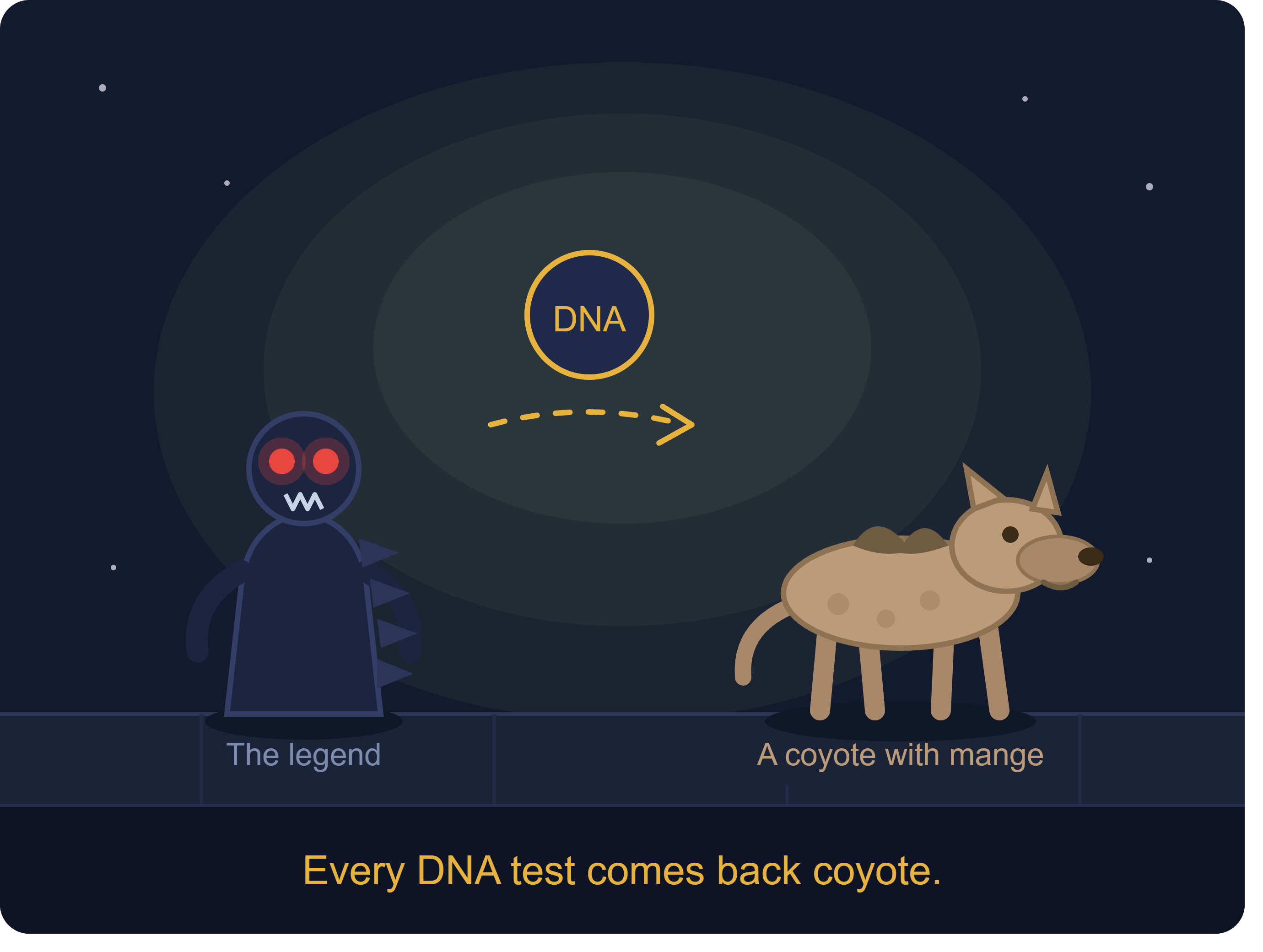
This myth is false. We know that Madelyne told reporters the Chupacabra she saw. Here is the twist, Researcher Benjamin Radford, managing editor of Skeptical Inquirer, spent five years on it. He found that the description Madelyne gave was quite similar to the one alien-human hybrid in the 1995 science-fiction film Species. It was then established that she watched the movie shortly before the sighting. He also found that the goats weren't drained from blood. The necropsies show that the chickens and the goats had normal blood levels , and the apparent blood loss is explained by internal bleeding and blood pooling at the bottom of a corpse after death. In the mid 2000's there were many sightings of a hairless dog. The DNA was tested and came back as a dog or coyote with sarcoptic mange (a skin disease that makes them lose their fur and look skeletal). The sad side of the Chupacabra myths is real animals dying of a painful disease being photographed as monsters.
Fun Facts
The original creature was described with a long snake-like tongue, glowing red eyes, and quills that some claimed doubled as wings and witnesses in Canóvanas swore it swooped down from the sky and leapt over treetops. One theory, via National Geographic, is that the culprits were rhesus monkeys that escaped from blood-research labs in Puerto Rico. The legend has an earlier chapter: in 1975 in Moca, more than 90 animals were killed and the blame went to something called el vampiro de Moca — the Moca vampire.