
Your mom sends you a text while driving home in your navy blue sedan. She asks you to get some vegetables like carrots, beets, and peas. Those were some random vegetables but you proceed to go to the grocery store to buy the vegetables. The first thing you found were frozen vegetables so you grab them. Then you come home to hear your mother ranting about how fresh vegetables are better than frozen. You then wonder what she was going to make out of those vegetables. Then you wonder, are fresh vegetables always healthier than frozen? Let’s pop this balloon to find out!
What are vegetables?
Vegetables are the edible parts of plants that we usually eat in savory dishes. The word “vegetable” is a cooking term, not a science term, so vegetables can come from almost any part of a plant: roots like carrots, stems like celery, leaves like spinach, flowers like broccoli, and bulbs like onions. Vegetables are rich in fiber, vitamins, minerals, and antioxidants, and most are mostly water and low in calories. Their colors come from natural pigments: green from chlorophyll, orange from beta-carotene, and purple from anthocyanins. People began growing vegetables about 10,000 years ago, when farming started. In 1893, the U.S. Supreme Court ruled that tomatoes count as vegetables for tax purposes, even though botanically they are fruits. Vegetables take anywhere from about 25 days (radishes) to over 100 days (pumpkins) to grow fully.
Are fresh vegetables always healthier than frozen?
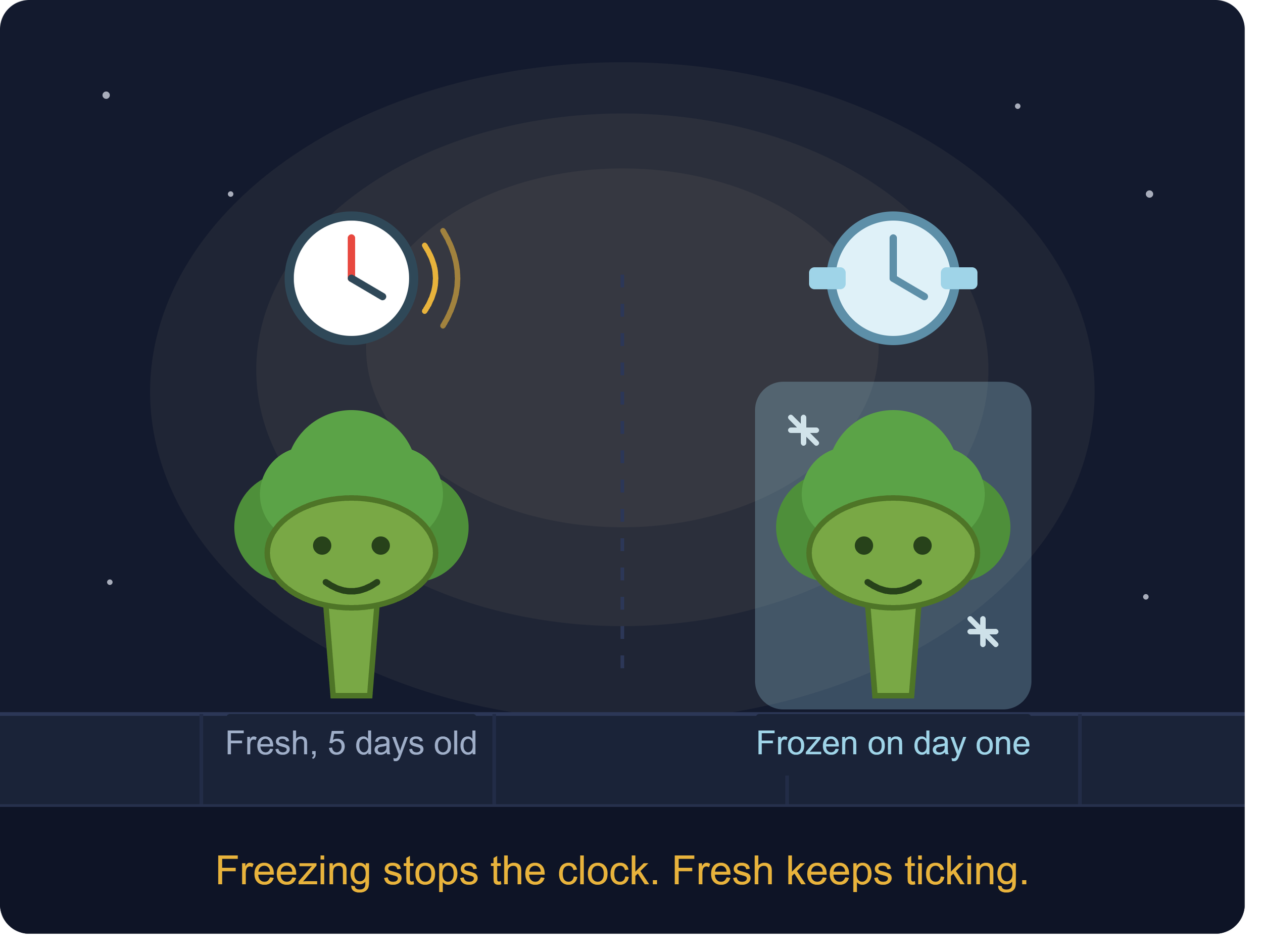
No, this is not true. Frozen vegetables are typically picked at peak ripeness and frozen within hours. Once frozen, nutrient loss essentially stops. Fresh doesn’t mean just-picked. Fresh produce in a store has usually been harvested days earlier, shipped, sat on a shelf, and then spent more days in your fridge. Nutrients drain away that whole time, from exposure to air, light, and heat. So in reality frozen vegetables are much healthier. This myth most likely came from the idea that fresh vegetables are freshly picked while frozen might be days old.
Fun facts
“Vegetable” isn’t a scientific category at all. Botany has no definition for it. It’s a kitchen word for plant parts we eat in savory dishes. Which means every vegetable is really a different plant part wearing the same label — carrots are roots, celery is a stem, spinach is a leaf, broccoli is a flower, onions are bulbs, potatoes are tubers. A potato isn’t a root. It’s a swollen underground stem. Broccoli and cauliflower are flower buds you’re eating before they bloom.